
Pool Tips ·
Pool Chemical Safety: Essential Storage Guidelines
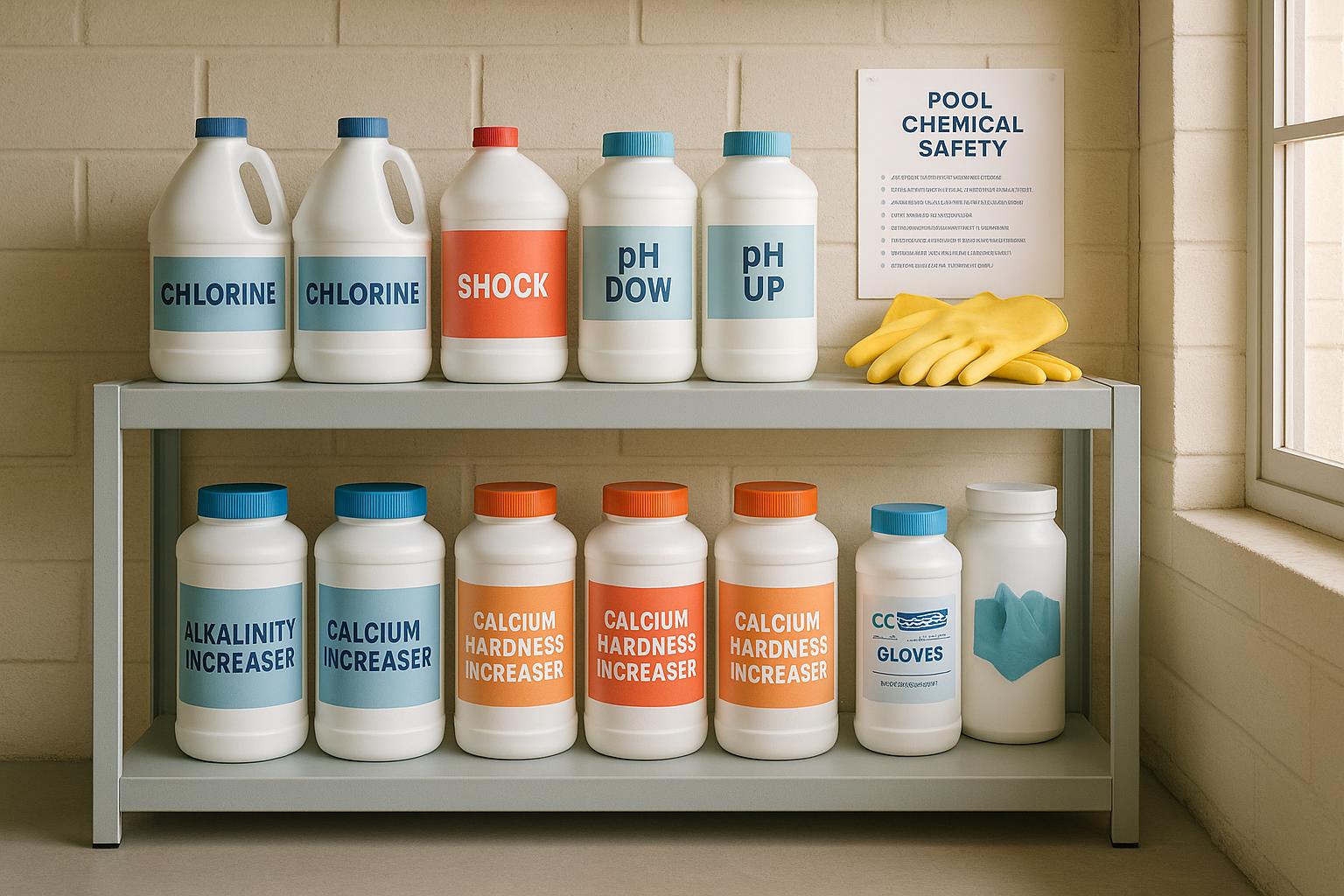
Improper pool chemical storage can lead to fires, toxic fumes, and costly equipment damage. Here's how to store them safely to avoid risks and maintain effectiveness:
- Store in a cool, dry, and ventilated area: Keep temperatures between 50°F–80°F and away from sunlight or moisture.
- Separate incompatible chemicals: Chlorine and acids must never mix. Store liquids below dry chemicals to prevent spills from causing reactions.
- Use original containers: Never transfer chemicals to unmarked containers; labels provide crucial safety and usage information.
- Secure storage: Lock cabinets or sheds to keep chemicals out of reach of children and pets.
- Inspect regularly: Check for damaged containers and replace them as needed.
Choosing the Right Storage Location
Where you store your pool chemicals can make all the difference between keeping them effective or turning them into a safety hazard. The right storage area shields chemicals from conditions that degrade their quality while minimizing risks. Let’s dive into how to create a safe and stable environment for your pool supplies.
Cool, Dry, and Well-Ventilated Areas
Temperature matters - a lot. Pool chemicals should be stored in a space where the temperature stays between 50°F and 80°F. Higher temperatures can cause chemical breakdowns or even dangerous reactions. Think about using a storage shed, a corner of your basement, or a garage shelf, but make sure these spots are away from windows or other heat sources.
Humidity is another factor to keep in check. Moisture can cause chemicals to clump, corrode their containers, or even react prematurely. If your storage area is prone to dampness, consider using a dehumidifier to keep the air dry and the chemicals stable.
Ventilation is key, too. Even sealed containers can release small amounts of gas over time. A well-ventilated space - whether through natural airflow or a mechanical system - helps disperse these vapors. Avoid storing chemicals in tight, enclosed spaces, especially liquids like muriatic acid, which can emit corrosive fumes.
Don’t forget the threat of sunlight. UV rays can break down chlorine products, making them less effective. Keep chemicals out of direct sunlight by placing them inside cabinets, on shelves away from windows, or in opaque containers. These precautions not only preserve the potency of your pool supplies but also make your storage area safer.
Avoiding Proximity to Hazards
It’s not just about the environment - where you place your chemicals relative to other items is equally important. Keep them at least 10 feet away from heat sources like water heaters, furnaces, or space heaters. Heat can trigger dangerous reactions or even ignition.
Chemicals and electrical equipment don’t mix well, either. Vapors can corrode electrical components, and sparks could ignite a reaction. So, steer clear of storing chemicals near outlets, panels, or motorized devices.
Another big no-no: keeping pool chemicals near substances like gasoline, oil, fertilizers, pesticides, or automotive fluids. These can react violently with oxidizing agents like chlorine, creating a serious safety risk.
And here’s a critical rule: never store pool chemicals near food or beverages. Even trace amounts of contamination can lead to severe health issues. This means avoiding kitchen pantries, refrigerators, or any area where food is prepared or consumed.
Finally, make sure your storage area is both secure and easy to access. A ground-level shed or similar location is ideal - somewhere safe but not so hard to reach that handling the chemicals becomes risky.
Proper Labeling and Container Management
Always store chemicals in their original containers with intact labels. These labels provide essential safety and emergency details, serving as your first line of defense against accidents. Transferring pool chemicals to unmarked containers, like jars or water bottles, can lead to confusion and dangerous situations if mistaken for something harmless. Along with proper storage, maintaining clear labels and sturdy containers is crucial to minimizing risks.
Original Manufacturer Labels
Manufacturer labels are packed with important information, including the product name, ingredients, concentration, handling instructions, hazard warnings, and expiration dates. Need to know how to dilute pool shock or what to do if chlorine gets in someone’s eyes? That label has you covered.
These labels also help you avoid potentially hazardous mix-ups. For instance, calcium hypochlorite and sodium bicarbonate may look alike as white powders, but confusing the two could disrupt your pool’s chemistry - or worse, cause a dangerous reaction.
Expiration dates on labels are another critical detail. They let you know when a chemical might lose its potency or become unstable. Using expired pool shock, for example, can lead to ineffective water treatment because the active chlorine has degraded.
Inspecting and Replacing Containers
Keeping an eye on the condition of chemical containers is just as important as preserving their labels. Regularly check for signs of damage, such as cracks, rust, bulging, or leaks. Even small cracks can allow moisture to seep in, leading to clumping, unexpected reactions, or toxic leaks.
If a label becomes damaged or unreadable, treat the container as if it holds an unknown substance. Mark it temporarily with a label like "Caution – Unknown Substance", isolate it, and reach out to the manufacturer for guidance on disposal and replacement. Never reuse cleaned containers, as residual chemicals can still pose risks.
When containers show wear or damage, contact the manufacturer for advice on safe disposal and replacement options. If a transfer to a new container is absolutely necessary, this should only be done following the manufacturer’s specific instructions to ensure safety.
Temperature and Environmental Controls
Once you've ensured proper labeling and container conditions, the next step is regulating the storage environment to preserve chemical stability. These controls work hand-in-hand with labeling and storage practices to create a comprehensive approach to chemical safety. Excess heat or moisture can compromise chemical stability and even trigger hazardous reactions.
Ideal Temperature Ranges
Pool chemicals should never be stored in areas where temperatures exceed 95°F. Chlorine-based chemicals, in particular, remain most effective when kept between 50°F and 70°F, as this range minimizes chemical breakdown and helps maintain their potency.
"Pool chemicals should never be stored in a location that exceeds 95° F." - South Shore Pool Supply Blog
"Keeping chlorine-based chemicals in a cool, dry environment with temperatures from 10 degrees Celsius to 21 degrees Celsius (50°F to 70°F) is recommended. Extreme temperatures can lead to a reduction in their effectiveness." - The Ledge Team
For pool enzymes, storage temperatures should stay below 120°F to prevent degradation. Similarly, algaecides and clarifiers deliver optimal performance when stored in cool, controlled environments. Using opaque containers can also help protect these chemicals from direct sunlight.
Avoid storing chemicals in areas where temperatures can easily exceed safe limits, such as unconditioned garages, near water heaters, or in spots exposed to direct sunlight. Along with temperature management, controlling moisture levels is equally critical for maintaining chemical safety.
Humidity and Water Protection
Moisture poses one of the greatest risks to stored pool chemicals. Even a small amount of water can trigger dangerous reactions, potentially releasing toxic gases or starting fires.
"A small volume of water falling onto stored pool chemicals can also cause a reaction." - US Chemical Storage
To reduce this risk, always seal containers tightly after use and store them off the ground on shelves or pallets to minimize exposure to moisture and contain any vapors. Choose storage areas carefully, avoiding locations prone to high humidity or water exposure, like basements near washing machines or spaces that might flood during heavy rain.
"It's important to keep pool chemicals stored in a dry area, away from the pool." - Leslie's Pool
For outdoor storage, weatherproof cabinets or sheds with proper sealing are ideal to keep rain out while still allowing for sufficient ventilation. And always follow this critical rule: never add water to dry chemicals - always add chemicals to water. This prevents the generation of intense heat, the release of toxic gases, or even explosions.
Separating Incompatible Chemicals
Keeping incompatible chemicals apart is essential to avoid dangerous reactions. Even when you’ve got temperature and humidity under control, mixing the wrong substances can result in toxic gas emissions or even explosions.
Identifying Incompatible Substances
Certain chemicals should never come into contact. For instance, chlorine and acids are a deadly combination. When mixed, they produce chlorine gas, which is highly toxic and can be fatal, especially in enclosed spaces. To stay safe, always store chlorine and acids separately. Similarly, avoid mixing oxidizers with organic materials or petroleum-based products, and keep different types of chlorine apart to prevent hazardous reactions or gas releases.
Different chlorine types, like calcium hypochlorite (commonly used as pool shock) and sodium hypochlorite (liquid bleach), can react dangerously if combined. Store these chemicals in separate locations to avoid creating unstable compounds.
Metal-based algaecides, such as those containing copper or silver, also need to be kept away from strong oxidizers like chlorine shock. When metals and oxidizers interact, they can speed up chemical degradation and lead to unpredictable reactions.
Given these risks, it’s critical to enforce strict physical separation when storing such substances.
Storing Liquids and Solids Safely
Knowing about these incompatibilities is just the first step - proper storage is where safety truly begins. The key principle? Always store liquid chemicals below dry chemicals. This setup ensures that if a liquid spills, it won’t drip onto dry substances, which could trigger dangerous reactions.
- Liquid chemicals: Place them on lower shelves, ideally in secondary containment trays to catch leaks and prevent the spread of hazardous material.
- Dry chemicals: Keep granular chlorine, pool shock, and pH adjusters on upper shelves. Always store them in their original containers with tightly sealed lids to prevent contamination.
To further reduce risks, create physical barriers between incompatible chemicals. Use non-combustible materials like metal dividers or store them in separate cabinets entirely. Whenever possible, maintain at least 3 feet of distance between chemical groups. If space is tight, consider using metal shelving units with solid dividers to keep chemicals safely apart during storage and handling.
Lastly, never transfer chemicals into unmarked or makeshift containers. The original packaging contains vital information about compatibility and ensures you avoid mix-ups during routine tasks like pool maintenance.
Security and Restricted Access
Keeping pool chemicals secure is essential to prevent unauthorized access and accidental exposure. When left unsecured, these substances can pose serious risks to children, pets, and anyone unfamiliar with their proper handling.
Lockable Storage Solutions
Proper storage practices are only part of the equation - securing chemicals with lockable solutions further reduces risks. Lockable cabinets and storage boxes are a must for safeguarding pool chemicals. The CDC underscores this point, advising to "secure the chemical storage area and pump room to limit access, especially to children and animals". This ensures that only trained individuals can handle these potentially hazardous substances.
When choosing storage options, look for chemical-resistant, spill-proof cabinets with reliable locks. For outdoor setups, consider lockable sheds or dedicated chemical storage boxes built to withstand weather conditions. These units should be elevated to avoid water contact and designed with proper ventilation to prevent dangerous gas buildup.
Additionally, the CDC recommends using locking mechanisms on chemical controllers to deter tampering by unauthorized individuals.
Safety Signage and Instructions
Clear and visible signage plays a dual role: it warns of potential dangers and provides valuable safety information to anyone near the chemical storage area. Signs like "Authorized Personnel Only" clearly communicate that access is restricted.
It’s crucial to display hazard warnings tailored to the chemicals stored. For instance, if you have muriatic acid, signs should highlight its corrosive nature. Chlorine storage areas should include warnings about gas hazards and the need for proper ventilation. Many states - such as Texas, Pennsylvania, Virginia, and Washington - mandate chlorine-related signage, which must comply with OSHA and ANSI Z535 standards.
Signs like "Danger: Do Not Mix Chemicals" can help prevent accidental and dangerous reactions. Posting reminders about personal protective equipment (PPE), such as "Eye and Glove Protection Required", ensures safety protocols are followed. Additional reminders, like "Turn On Fan Caution" near ventilation switches, further enhance safety measures.
Make sure Safety Data Sheets (SDSs) are easily accessible near storage areas to provide quick reference during emergencies. It’s also a good idea to prominently display the Poison Control number (1-800-222-1222) alongside basic first-aid instructions for chemical exposure.
To ensure durability, use weather-resistant signage with bold graphics and clear text that remains legible even in low-light conditions. When paired with secure storage, these visual cues reinforce safety protocols and minimize risks.
Key Takeaways for Safe Storage
Safe pool chemical storage boils down to three essential principles: location, separation, and security. As discussed earlier, the first step is choosing the right storage environment. Opt for a cool, dry, and well-ventilated area, keeping it far from heat sources and living spaces. It's equally important to separate incompatible chemicals - oxidizers like chlorine should always be stored away from acids and flammable materials.
To maintain chemical stability, keep storage temperatures between 50°F and 80°F and avoid exposure to sunlight or moisture. High humidity can cause powdered chemicals to clump or react, while extreme temperatures might weaken containers or cause dangerous gas buildup.
Security is another critical factor. Use lockable storage solutions and clear signage to minimize risks. Even seasoned pool owners can benefit from visible reminders about handling procedures and emergency contact information. Regularly reviewing your setup ensures these safety measures remain effective over time.
Investing in proper storage - whether it's a chemical-resistant cabinet, a lockable shed, or a ventilation system - can save you from dealing with degraded chemicals, expensive replacements, or potential accidents. Improper storage isn't just a financial risk; it can also pose serious safety hazards.
At the start of each pool season, take time to inspect your storage setup. Check for damaged containers, update safety signs, test locks, and confirm that ventilation systems are working. Make sure everyone in your household understands the importance of staying away from these storage areas. A few simple updates now can prevent bigger issues later.
Your pool should be a place of relaxation, not stress. By sticking to these storage practices, you're ensuring a safer space for everyone to enjoy.
FAQs
Why should pool chemicals stay in their original containers, and what dangers come with transferring them to unmarked ones?
Keeping pool chemicals in their original containers is a must for safety. These containers are designed to minimize risks like leaks, spills, or unwanted chemical reactions. Plus, they come with clear labels that include usage instructions and hazard warnings, making them easy to identify and handle correctly. Moving chemicals into unmarked or unsuitable containers can increase the risk of accidents, such as misuse, harmful reactions, or even poisoning due to confusion.
For a safer pool area, always store chemicals in their original labeled containers. Keep them in a secure, well-ventilated spot, out of reach of children and pets. This not only safeguards your health but also helps protect the money and effort you’ve invested in maintaining your pool.
Why is it dangerous to store pool chemicals near substances like gasoline or fertilizers?
Storing pool chemicals near items like gasoline or fertilizers poses serious risks. These substances can be highly flammable or reactive, and when they come into contact with pool chemicals - especially oxidizers or acids - they might lead to fires, explosions, or the release of toxic fumes.
Even minor spills or leaks can spark hazardous reactions, particularly in warm conditions or when exposed to sparks. To stay safe, always keep pool chemicals in a cool, dry, and well-ventilated space, far from any materials that could react with them.
How can I securely store pool chemicals and prevent accidents?
To keep pool chemicals secure and reduce risks, store them in a locked, well-ventilated space that’s inaccessible to children and pets. Always use the original containers with clear labels to avoid confusion and prevent accidental chemical reactions.
Make sure to store chemicals separately, especially those that could react dangerously if mixed, like chlorine and acids. The storage area should remain cool and dry, away from direct sunlight or extreme temperatures. Regularly check containers for any signs of leaks or damage, and handle spills immediately using proper safety precautions.
Taking these precautions ensures a safer, more organized storage area, protecting both your household and your pool.